
Hydraulic & Pneumatic
FEP Encapsulated O-Ring
An elastomer core with an FEP jacket for applications balancing elasticity and media compatibility.
Back to Hydraulic & Pneumatic →
- Jacketed contact surface
- O-ring installation geometry
- Core and jacket selection
Product overview
Understand the Product Before Selecting a Specification
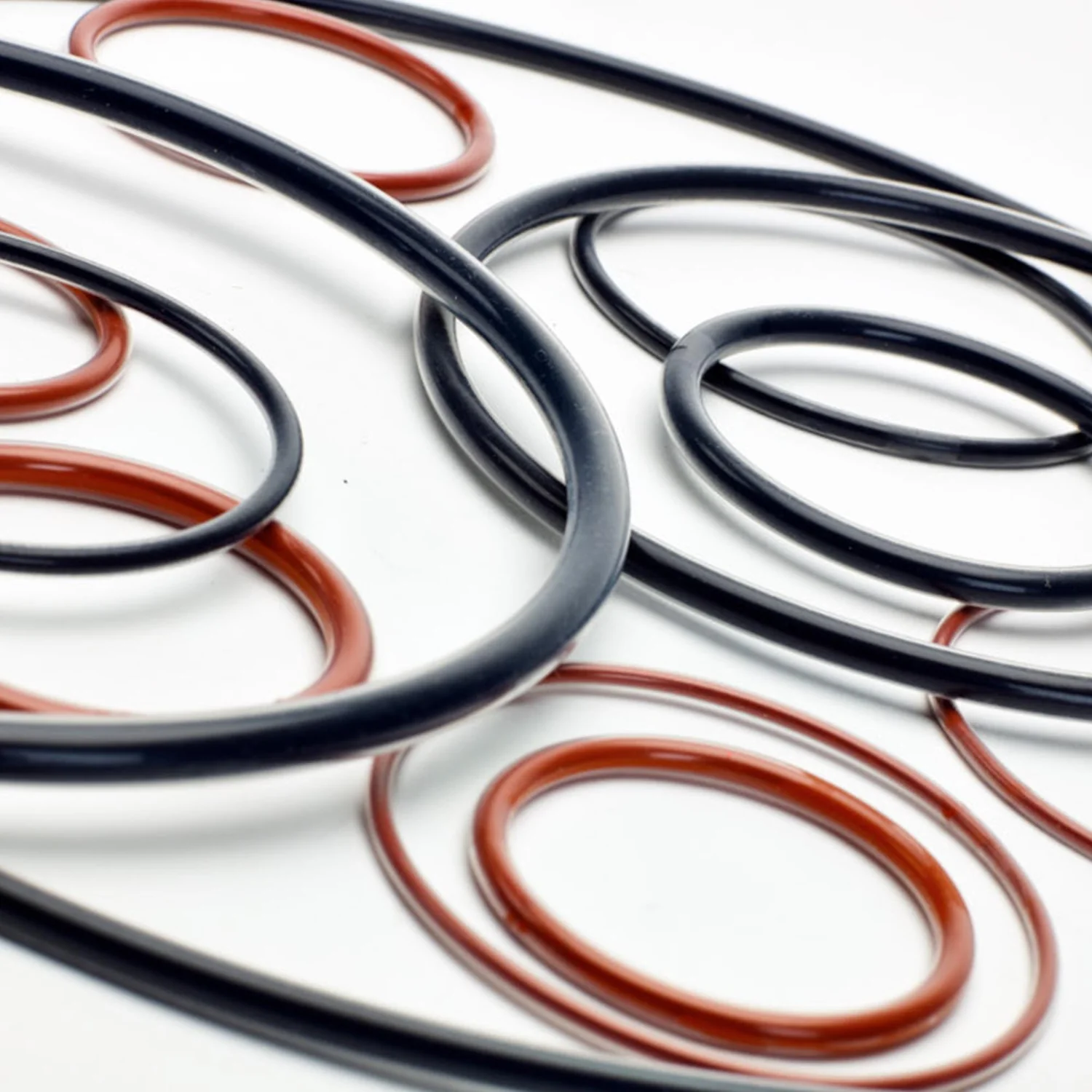
ouning supplies FEP encapsulated O-rings with an elastomer core and an FEP jacket. They are considered where the application needs an O-ring profile together with a fluoropolymer contact surface. Core material, jacket, size, and groove design should be confirmed against the media, temperature, and assembly method.
Jacketed contact surface
The FEP jacket provides the media-contact surface while the elastomer core supplies recovery, subject to temperature and groove limits.
O-ring installation geometry
The part is reviewed as an O-ring profile. Groove fill, stretch, and installation method still need to match the encapsulated section.
Core and jacket selection
Core compound and jacket should be selected together against media, temperature, and whether the joint is static or has limited motion.
Product scope
Applications, Materials, and Supply Options
Use these categories as a starting point. The final specification depends on the complete application.
Common Applications
- Chemical process equipment
- Aggressive media where a jacketed contact surface is required
- Static sealing positions
- Pumps, valves, and fittings
Material Options
- FEP jacket over an elastomer core
- Silicone or FKM cores reviewed against the application
- Other core compounds when the project requires them
Supply Capabilities
- Standard and custom sizes
- Material selection support
- Sample and batch production
- Dimensional inspection
Before requesting a quote
Selection Factors for FEP Encapsulated O-Ring
More complete input leads to a clearer product and material discussion.
Size definition
Confirm inside diameter, cross-section, groove dimensions, and whether the encapsulated section must match an existing O-ring groove.
Media and temperature
List every fluid or gas that contacts the jacket and provide continuous and peak temperature.
Core material
State any preferred core compound, or share the service conditions so a core can be reviewed.
Assembly method
Describe installation, stretch, and whether the joint will be opened repeatedly. Encapsulated rings can be less forgiving to overstretch than a solid elastomer O-ring.
Project workflow
A Practical Review Process
The steps remain clear whether you are identifying a standard part or developing a custom specification.
- 01
Define
Share the product, drawing, dimensions, service conditions, and quantities.
- 02
Confirm
Align the material, hardness, tolerances, tooling, samples, and documentation.
- 03
Validate
Review samples and complete the application-specific approval process.
- 04
Supply
Maintain confirmed specifications and identification for repeat requirements.
Questions & answers
FEP Encapsulated O-Ring Questions
Common questions about selecting and requesting FEP Encapsulated O-Ring.
When is an FEP encapsulated O-ring considered?
It is often reviewed when the application needs an O-ring profile and a fluoropolymer contact surface. Groove design, temperature, and assembly method still need confirmation.
Can it replace a standard O-ring in the same groove?
Not automatically. The jacketed section, stretch, and groove fill differ from a solid elastomer O-ring. Send the groove dimensions with the inquiry.
What should I send for a quotation?
Provide size or drawing, preferred core material if known, media, temperature, quantity, and whether the duty is static or has movement.