
Automotive
Valve Core Seal
A rubber component designed to maintain sealing in valve-core assemblies.
- Compact core sealing element
- Gas-tight service
- Drawing-led identification
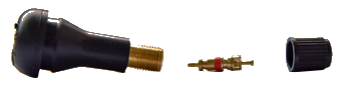
Product overview
Understand the Product Before Selecting a Specification
ouning supplies rubber sealing components for valve-core assemblies. The part is used where a compact elastomer element must hold gas tightness in the core structure. Size, hardness, and material should be confirmed against the core drawing, gas, and temperature.
Compact core sealing element
The part occupies a small position in the valve core and must match the seat or groove intended for that assembly.
Gas-tight service
Material and hardness should be reviewed against the contained gas, temperature, and whether the core is opened in service.
Drawing-led identification
Core seals are rarely selected by appearance alone. A drawing, sample, or core manufacturer reference is the practical starting point.
Product scope
Applications, Materials, and Supply Options
Use these categories as a starting point. The final specification depends on the complete application.
Common Applications
- Valve-core assemblies
- Automotive air and fluid valves
- Compact gas-tight sealing positions
- Replacement or custom core components
Material Options
- NBR
- FKM
- Application-specific compounds reviewed against the service conditions
Supply Capabilities
- Standard and custom sizes
- Material selection support
- Sample and batch production
- Dimensional inspection
Before requesting a quote
Selection Factors for Valve Core Seal
More complete input leads to a clearer product and material discussion.
Core geometry
Provide a drawing or sample of the valve core and the sealing element, including critical diameters and heights.
Media and pressure
State the gas or fluid, working pressure, and temperature.
Hardness and material
Include any specified compound or hardness, or share the service conditions for a review.
Project quantities
Share sample quantity, order quantity, and packaging if the parts are small and counted by bag or reel.
Project workflow
A Practical Review Process
The steps remain clear whether you are identifying a standard part or developing a custom specification.
- 01
Define
Share the product, drawing, dimensions, service conditions, and quantities.
- 02
Confirm
Align the material, hardness, tolerances, tooling, samples, and documentation.
- 03
Validate
Review samples and complete the application-specific approval process.
- 04
Supply
Maintain confirmed specifications and identification for repeat requirements.
Questions & answers
Valve Core Seal Questions
Common questions about selecting and requesting Valve Core Seal.
Can you identify a valve core seal from a sample?
A sample helps. Critical diameters, height, material, and the mating core drawing still need confirmation before production.
Which material is used?
NBR and FKM are commonly reviewed. The choice depends on the gas or fluid, temperature, and required compression set behavior.
What should I send with an RFQ?
Send the core drawing or sample, dimensions, material if known, gas, pressure, temperature, and quantity.